How RSJ Securities Trades

We specialize in algorithmic trading, with market making at the core of our strategy.

RSJ Securities specializes in algorithmic trading, where both decision-making and trade execution are automated. Our core strategy is market making – the continuous provision of liquidity to financial markets.

As a market maker, we act as an intermediary, allowing other market participants to trade without having to search for a counterparty. Investors know they can buy or sell whenever they need to, with confidence in reliable pricing. In doing so, we help increase market liquidity. This significantly simplifies trading, strengthens trust in the market, and in turn supports further trading activity.

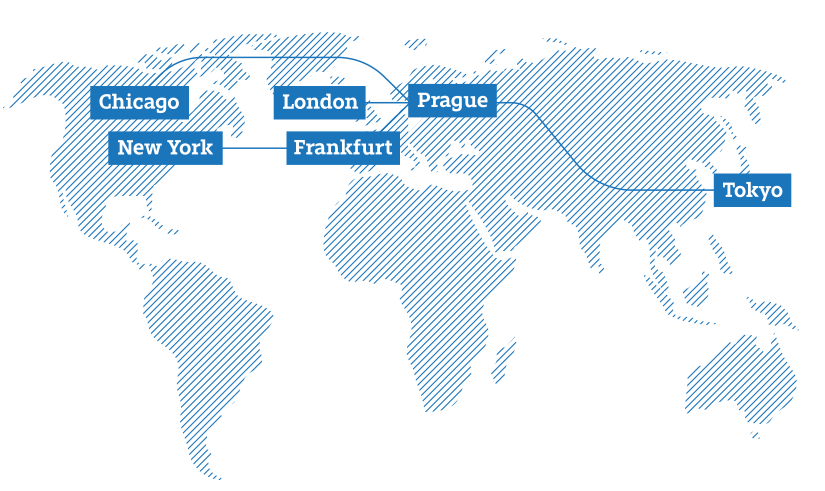
We operate in the world’s leading financial centres, including New York, Chicago, London, Frankfurt, and Tokyo. Our primary focus is on futures contracts, which help market participants manage exposure to future price movements. At the same time, we are a significant participant in spot trading of U.S. government bonds.

RSJ Securities operates throughout the entire trading week. From Prague, we support markets around the globe, covering trading hours across multiple time zones.


Algorithmic Trading

Algorithmic trading means that trade execution is delegated to computer programs. Based on predefined rules, these programs evaluate market conditions and trade automatically. The goal is to achieve the best possible price and respond efficiently to market changes. How does this work in practice? Depending on the level of human involvement in decision-making, there are two main approaches.

Algorithmic execution

Algorithmic execution

Algorithmic execution is used when a trader decides what to buy or sell, while an algorithm takes care of the technical execution. The algorithm breaks large orders into smaller parts and manages price and timing to ensure the trade is executed as efficiently as possible.

Market maker

A market maker is an intermediary that allows investors to trade without having to search for a counterparty. This makes it possible to buy or sell at any time with confidence in reliable pricing

Co-location

Co-location means placing servers directly in exchange data centres. This significantly reduces data transmission time between the exchange and the trading system and increases the reliability and security of the connection.

Liquidity

Liquidity describes how easily an asset can be bought or sold without significantly affecting its price. Higher liquidity means trading is easier and cheaper for all market participants.

Algorithmic Decision-making

Algorithmic decision making

A more advanced approach in which the algorithm independently assesses market conditions and decides what to trade, when, and how – without direct human instruction. Both decision-making and execution are fully automated and follow a predefined strategy. This approach lies at the core of our trading strategy.

Futures

An agreement to buy or sell a financial instrument or commodity at a predetermined price on a future date. Futures are used to manage risks such as changes in exchange rates, interest rates, or equity prices.

Spread

The difference between the buy and sell price of a financial instrument. For traders, it represents a transaction cost; for market makers, it is one of the sources of profit.

Our People

At RSJ Securities, a team of around 60 people ensures the smooth operation of our algorithmic trading. Analysts, developers, and traders work closely together to build and run trading algorithms that must continuously adapt to fast-moving markets.

Naši lidé

Analysts

Analysts design the mathematical models and algorithms behind our trading systems. They translate trading intuition and market observations into quantitative form, test hypotheses using financial market data, and apply advanced statistical and computational methods. Once validated, their solutions are handed over to developers for production implementation.

Developers

Developers work closely with analysts and mathematicians who design and refine models that predict how to trade effectively. Developers turn these models into robust code. They tackle complex mathematical problems, process vast volumes of data, and build high-performance systems. Flexibility, creativity, and deep technical expertise are essential.

Traders

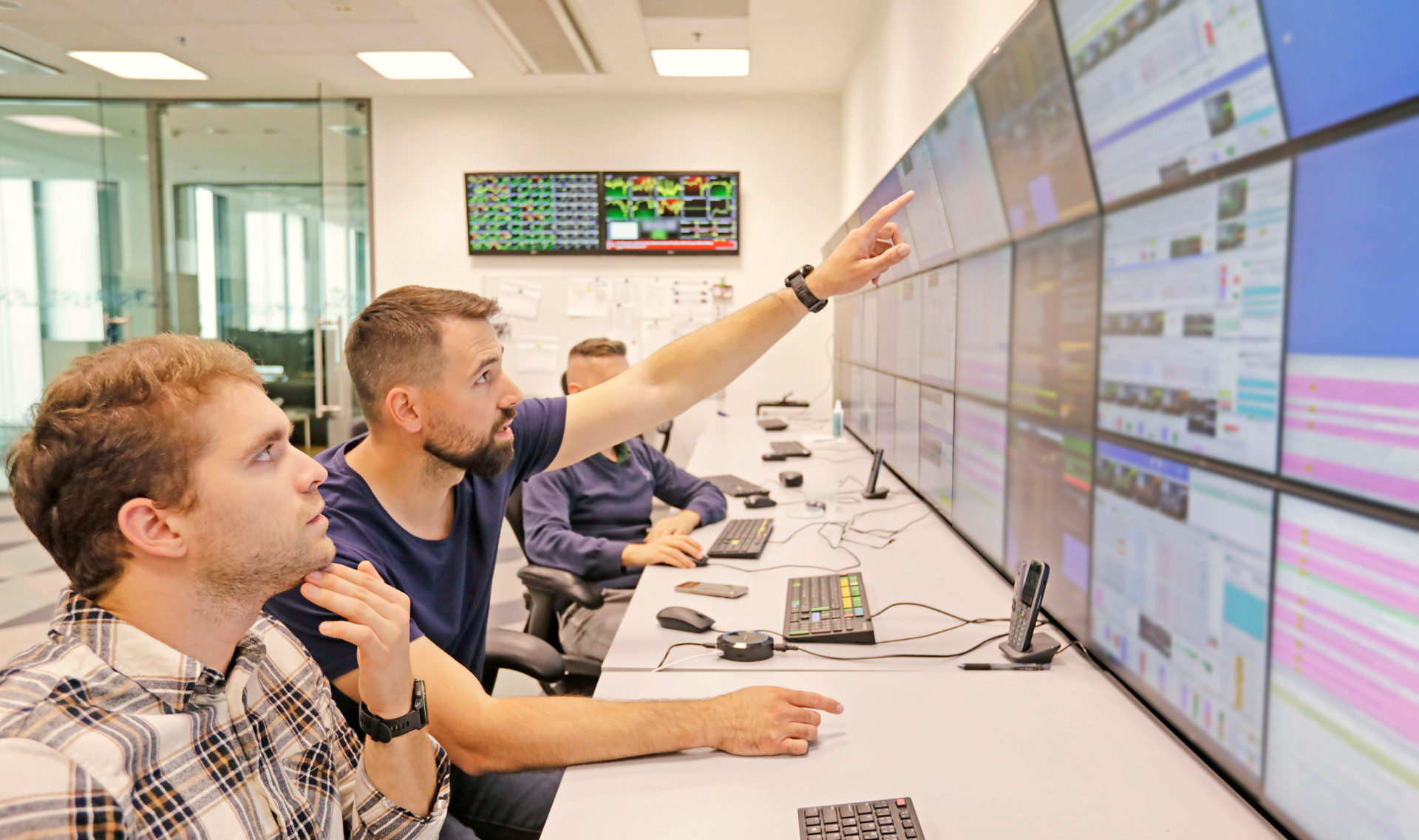
Traders oversee live trading 24 hours a day, from Monday to Friday. They monitor and refine algorithmic strategies, continuously assess macroeconomic conditions and market fundamentals, adjust risk parameters, explore new opportunities, and provide ongoing feedback to analysts and developers.

Competing every day with the world’s best market participants requires constant reassessment, continuous improvement, and the ability to adapt quickly to a changing environment.

Where We Operate

mapa1

London

  • London is where we have been active the longest. We operate on ICE Futures Europe, one of Europe’s leading derivatives exchanges.
  • We executed our first algorithmic trade here as early as 2002.
  • In 2004, we became an officially appointed market maker.

Chicago

  • In Chicago, we trade on CME Group exchanges, including CME, NYMEX, and Chicago Board of Trade (CBOT).
  • We have been active in the Chicago market since 2007.
  • We focus primarily on futures linked to interest rates, bonds, equity indices, and commodities.

Frankfurt am Main

  • In 2009, we became the very first Czech company to join Eurex, Germany’s leading derivatives exchange and part of Deutsche Börse.
  • Since 2013, Bronislav Kandrík, CEO of RSJ Securities, has been a member of the Eurex Exchange Council.

New York

  • In New York, often referred to as the world’s financial capital, we operate on Tradeweb Markets Inc.
  • Through its Dealerweb CLOB platform, we trade U.S. government bonds (US Treasuries) on the spot market.

Tokyo

  • Since 2023, we have been active on Osaka Exchange (OSE), part of the Japan Exchange Group.
  • OSE is the largest derivatives exchange in Japan.